Grand Prairie, TX · Dallas County
Basement Water Removal in Grand Prairie, TXBasement Drying Services & Emergency Basement Flooding
Basement Water Removal in Grand Prairie runs from basement water pump out and basement drying services to basement dehumidification.
Answered 24/7
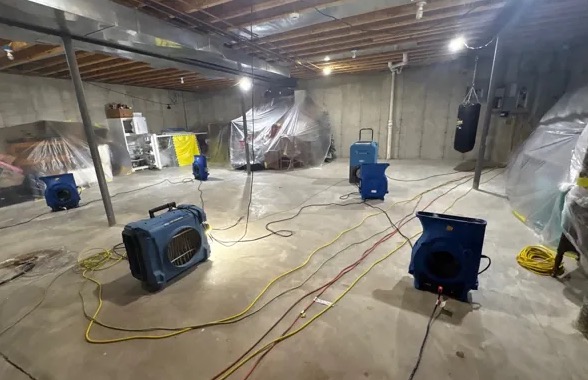
Basement Water Removal Solutions for Grand Prairie Homeowners
In Grand Prairie, a finished basement or lower level takes more work after a flood. Carpet, pad, laminate, drywall and insulation all trap water against the concrete and framing.
Basements are uncommon in Grand Prairie. The same extraction and drying steps apply to slab-level rooms, sunken dens and garages that take on water.
Homeowners in Grand Prairie can call (972) 480-3796 day or night when the basement is taking on water. Service also covers Irving, Euless and Duncanville, with the same pumping and drying steps.
Professional Basement Water Removal Offerings
Basement Drying Services
Equipment stays until the basement reads dry, not just until it looks dry. Removing it early lets dampness return.
Emergency Basement Flooding
A flooded basement threatens the furnace, water heater and anything stored on the floor. Fast pumping protects what can still be saved.
Basement Floor Water Damage
Concrete floors are squeegeed, extracted and dried with airflow and dehumidifiers until moisture readings drop.
Basement Moisture Inspection
An inspection shows how high water wicked up the walls and how far it spread under flooring, which sets the drying plan.
Basement Dehumidification
Dehumidifiers run continuously during drying, and their output is checked to track how much water is still coming out of the materials.
Common Symptoms Requiring Basement Water Removal
Mold or Mildew
Dark spots on drywall, framing or stored items mean the area has stayed wet for days.
Efflorescence on Concrete Walls
White, powdery deposits on concrete walls mean water is passing through the masonry.
Warped or Buckling Flooring
Flooring that buckles, lifts or feels spongy has water trapped between it and the slab.
Soggy or Wet Carpeting
Carpet that feels damp or smells sour is holding water in the pad against the concrete.
How Basement Water Removal Works in Grand Prairie
Step 1: Source Control and Water Pump Out
The leak is shut off and standing water is pumped out, starting at the lowest point.
Step 2: Water Extraction
Extractors pull water from carpet, pad and concrete, and wet vacs clear corners and stairs.
Step 3: Dehumidification and Drying
Large dehumidifiers and air movers dry walls, framing and slab over several days.
Step 4: Inspection and Clearance for Repair
Final readings confirm the basement is dry and ready for drywall and flooring repairs.
Common Causes of Basement Water Damage in Grand Prairie
Improper Landscape Grading
Soil that slopes toward the house directs rainwater straight to the basement walls.
Sewer Line Backups and Blockages
A blocked sewer line can push wastewater up through basement floor drains and toilets.
Appliance Malfunctions and Overflows
Washers, utility sinks and water softeners in the basement can overflow or leak.
Heavy Rainfall and Storm Flooding
Heavy rain saturates the soil and pushes water through walls, cracks and the floor joint.
Professional Basement Water Removal for All Properties
Residential Basement Water Removal
Older homes with a basement may see seepage with every heavy storm. Water removal handles the current damage, and the entry point is noted for a waterproofing contractor.
Commercial Basement Water Removal
Multi-unit buildings with shared basements need each storage and laundry area pumped, dried and documented for the property manager.
The Risks of DIY Basement Water Removal
Checking appliance hoses and extending downspouts away from the house are good DIY steps before storm season. Once the basement floods, call (972) 480-3796 for help.
Understanding Basement Water Removal Pricing
Sewage cleanup, finished walls, after-hours calls and damaged appliances all add to the total for basement water removal in Grand Prairie.
Time of Service
Night, weekend and storm calls can cost more than a scheduled weekday visit.
Affected Materials
Finished walls, carpet and laminate take more removal work than bare concrete.
Water Depth and Volume
Deeper water takes more pumping time and usually means more materials got wet.
Does Insurance Cover Basement Water Removal?
Photos, moisture readings and drying logs from local water damage pros help support an insurance claim for basement water damage in Grand Prairie.
Advantages of Local Basement Water Removal Experts
Clear Communication
You get plain updates on what was found, what was removed and how drying is going.
Post-Service Moisture Verification
Final readings are recorded before equipment leaves, so you know the basement is dry.
Detailed Damage Documentation
Photos, readings and drying logs are kept to support your insurance claim.
24/7 Basement Water Removal When You Need It
Storm night, weekend or holiday, the pros handle basement water in Grand Prairie. Call (972) 480-3796 to get pumps running and drying started.
Call Now (972) 480-3796Basement Water Removal Near Grand Prairie: Areas Served
Help with basement water removal reaches Irving, Euless and Duncanville, plus other communities around Grand Prairie, for finished and unfinished basements alike.
- Basement Water Removal in Irving
- Basement Water Removal in Euless
- Basement Water Removal in Duncanville
- Basement Water Removal in Bedford
- Basement Water Removal in Cedar Hill
- Basement Water Removal in Kennedale
- Basement Water Removal in Richland Hills
- Basement Water Removal in Hurst
- Emergency Damage Restoration in 75050
- Storm Damage Restoration in 75050
- Water Damage Restoration in 75050
- Water Extraction Service in 75050
- Water Leak Detection in 75050
- Water Removal Service in 75050
- Emergency Damage Restoration in 75051
- Storm Damage Restoration in 75051
Basement Water Removal FAQs
Can wet drywall in a basement be saved?
Sometimes, if the water was clean and removed quickly. Soaked or contaminated drywall is cut out above the water line.
What is involved in basement water removal?
Making power safe, pumping out standing water, extracting floors and carpet, removing soaked materials and dehumidifying until dry.
How is basement wall drying done?
Wet drywall is cut back, insulation removed and directed airflow and dehumidifiers dry the studs and masonry.
What happens during basement moisture control?
Dehumidifiers and air movers keep humidity low while materials dry, and readings confirm when the space is normal.
Why is fast water removal so important for basements?
Basements dry slowly, so every hour of standing water adds drying days and more materials to replace.